


 Adventure Tours
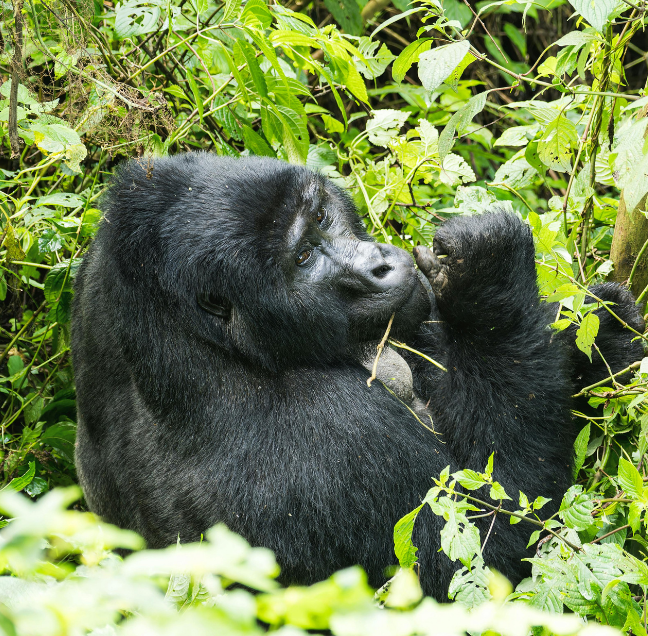
Rwanda approaches safari differently. It’s more refined, more structured and in many ways, more intentional. The country has positioned itself around a single, powerful experience, gorilla trekking, and built everything else around doing that one thing exceptionally well.
Volcanoes National Park is where it happens. The terrain is dramatic: mist-covered mountains, dense vegetation and steep slopes that make the trek both challenging and rewarding. Compared to Uganda, trekking here is generally shorter and more accessible, though still physically demanding.
The experience itself is tightly managed. Group sizes are small, time with the gorillas is limited and everything is designed to minimize impact. It feels controlled, but not restrictive. Instead, it creates an environment where the encounter feels focused and undisturbed.
Rwanda’s advantage is efficiency. Distances are shorter, infrastructure is stronger and transitions between locations are smoother. You can move from Kigali to the forest within a few hours, which makes it possible to combine a high-end gorilla experience with limited travel time.
There’s also a clear emphasis on quality. Lodges are well-designed, service is consistent and the overall experience feels polished. It’s a different kind of safari. Less about variety, more about depth and refinement.
Beyond gorilla trekking, Rwanda offers additional layers. Nyungwe Forest for chimpanzees, Akagera National Park for a more traditional safari and cultural experiences that provide context to the country’s history and conservation efforts.
Rwanda isn’t trying to compete on scale. It focuses on doing fewer things, but doing them exceptionally well. And for travelers looking for a more streamlined, high-quality experience, that approach works.


